



In the steel structure building market, foil faced glass wool blanket has become the most widely specified roof insulation product across industrial, commercial, and agricultural construction sectors. Understanding why this specific product dominates the roofing insulation market helps specifiers, contractors, and building owners make informed procurement decisions. This guide examines the practical performance, installation, and economic factors that explain why foil faced glass wool is popular in roofing and why it continues to gain market share against alternative insulation products.
Radiant Heat Reflection Reduces Cooling Load
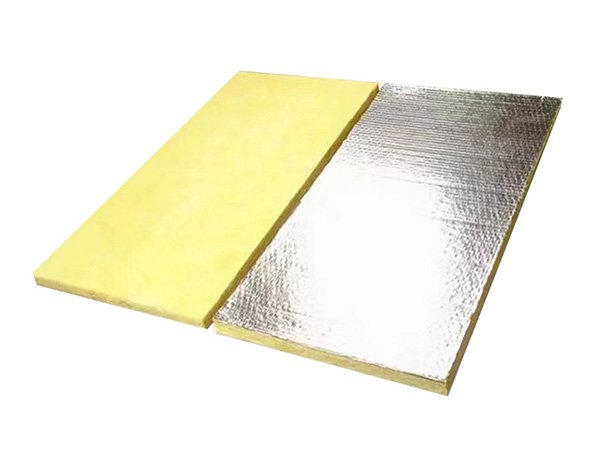
The primary reason for the popularity of foil faced glass wool blanket in roofing is its ability to reflect radiant heat. Steel structure roofs absorb intense solar radiation during summer months—uninsulated metal roof surfaces can reach 65-80°C, radiating substantial heat downward into the building interior. The highly reflective aluminum foil facing on foil faced glass wool blanket products reflects up to 90% of this radiant heat back toward the roof panel, preventing it from entering the building interior.
This radiant barrier effect reduces the building's cooling load by 25-40% compared to non-reflective roof insulation materials, directly reducing air conditioning energy consumption and peak demand charges. For warehouses and distribution centers in warm climates, this cooling load reduction often pays for the insulation investment within 1-2 years through energy savings alone.
Condensation Control in Steel Roof Systems
Condensation in steel structure roofs is a persistent problem that causes corrosion of metal panels, water damage to building contents, and degradation of insulation performance. The aluminum foil facing on foil faced glass wool blanket products functions as a vapor retarder with water vapor transmission rates below 0.02 g/m²/day when joints are properly sealed. This vapor barrier prevents moisture-laden interior air from reaching the cold roof panel, where condensation would form during winter months.
In a typical steel structure factory with interior relative humidity of 50-60% during winter, an unsealed vapor retarder would allow moisture migration through the insulation to the cold roof surface—resulting in condensation on the underside of the roof panel and potential water dripping onto production equipment and inventory. The factory-integrated vapor retarder of foil faced glass wool blanket eliminates this risk when installed with properly sealed overlaps and penetrations.
Fast, Simple Installation Reducing Project Timelines
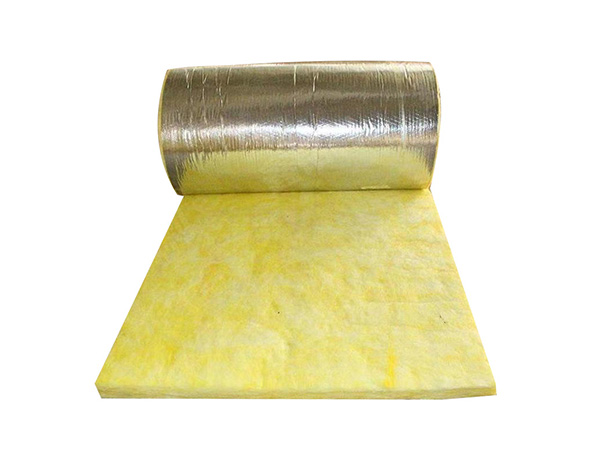
Construction speed is a critical economic factor in building projects—every day of construction delay costs money. Foil faced glass wool blanket products install significantly faster than alternative roof insulation methods. The blankets are supplied in long rolls matching the roof purlin spacing, simply unrolled between purlins and secured at intervals with mechanical fasteners or adhesive. No cutting to size, no separate vapor barrier installation, and no complex fitting around roof penetrations is required.
An experienced crew can install foil faced glass wool blanket roof insulation at rates of 400-600 m² per day—2-3 times faster than rigid board insulation systems. For a 5000 m² roof, this speed advantage translates to 5-10 fewer days of insulation installation time, directly reducing labor cost and expediting the overall construction schedule.
Lightweight Material Reduces Steel Structure Cost
The low density of foil faced glass wool blanket—typically 16-32 kg/m³—adds minimal dead load to the steel structure. In a standard roof assembly, a 100 mm thick foil faced glass wool blanket weighs approximately 2-3 kg/m², compared to 10-20 kg/m² for the same thermal resistance using rigid board insulation materials. This weight reduction directly impacts the steel structure design: lighter roof loads mean lighter steel purlins, smaller rafters, and potentially reduced column and foundation requirements.
For a large steel structure building, the structural steel cost savings from using lightweight foil faced glass wool blanket instead of denser insulation can offset 30-50% of the insulation material cost—a compelling economic advantage that drives specification decisions.
Cost-Effective Thermal Performance
Foil faced glass wool blanket achieves thermal conductivity of 0.033-0.040 W/mK—thermal performance equivalent to more expensive insulation materials at significantly lower cost. The combination of the glass wool core's conductive thermal resistance and the aluminum foil's radiant heat reflection means that a foil faced glass wool blanket system outperforms unfaced glass wool of the same thickness, delivering better U-values per millimeter of insulation depth.
The cost per unit of thermal resistance (cost per R-value per square meter) of foil faced glass wool blanket is among the lowest of all commercially available insulation products. This cost efficiency is the fundamental economic driver behind its widespread adoption in the price-sensitive steel structure building market.
Flexibility for Irregular Roof Geometries
Steel structure roofs often feature complex geometries—curved profiles, multiple ridge lines, stepped elevations, and numerous roof penetrations for ventilation, smoke vents, and equipment supports. Foil faced glass wool blanket conforms easily to these irregular roof geometries without the cutting, waste, and fitting complexity associated with rigid board insulation. The flexible blanket wraps around purlins, fits into tight corners, and can be cut and patched around penetrations with minimal waste.
This installation flexibility is a major practical advantage on real construction sites where perfect grid layouts and ideal conditions are rarely achieved. The ability to adapt foil faced glass wool blanket to site conditions without specialized tools or skilled fitting reduces installation errors and ensures consistent insulation coverage across the entire roof area.
FAQ
Q1: Why is foil faced glass wool more popular than unfaced glass wool for roofing?
A: The aluminum foil facing provides integrated radiant barrier and vapor retarder functions that unfaced products lack. These additional functions improve thermal performance by 25-40% and eliminate the need for a separate vapor barrier installation.
Q2: Does foil faced glass wool blanket work for all roof types?
A: Foil faced glass wool blanket is optimized for steel structure roofs with purlin spacing of 1.0-1.5 m. It can also be used in concrete roof decks with appropriate fixing systems, though rigid board products may be preferred for flat concrete roofs.
Q3: How is radiant heat reflection measured for foil faced glass wool?
A: The heat reflection performance is measured as emissivity—typically 0.03-0.05 for aluminum foil, meaning the surface emits only 3-5% of the radiant heat that a perfect black body surface would emit, effectively reflecting 95-90% of incident radiant energy.
Q4: Is foil faced glass wool suitable for cold climate roofing?
A: Yes. In cold climates, the foil facing reflects interior heat back into the building, reducing heating energy loss through the roof. The vapor retarder function is also critical in cold climates to prevent interior moisture from condensing inside the roof assembly.
Q5: Does the aluminum foil facing require grounding for electrical safety?
A: The thin aluminum foil on foil faced glass wool blanket products does not require grounding for building electrical safety. However, confirm with the roofing contractor that the glass wool insulation does not interfere with any lightning protection system requirements for the building.
Conclusion
The widespread popularity of foil faced glass wool blanket in roofing applications is based on concrete performance and economic advantages. Its radiant heat reflection capability reduces cooling energy consumption by 25-40%. Its integrated vapor retarder prevents roof condensation that would otherwise damage building structure and contents. Its lightweight design and fast installation reduce construction time and steel structure costs. Its cost-effective thermal performance delivers the lowest cost per unit of thermal resistance in the insulation market. These combined factors explain why foil faced glass wool is popular in roofing and why it remains the dominant insulation choice for steel structure buildings worldwide.
References
1. EN 13162:2012+A1:2015, "Thermal Insulation Products for Buildings — Factory Made Glass Wool (GW) Products — Specification," European Committee for Standardization, Brussels, 2015.
2. ISO 6946:2017, "Building Components and Building Elements — Thermal Resistance and Thermal Transmittance — Calculation Methods," International Organization for Standardization, Geneva, 2017.
3. ASHRAE Handbook — Fundamentals, Chapter 26: Insulation for Mechanical Systems, American Society of Heating, Refrigerating and Air-Conditioning Engineers, Atlanta, GA, 2021.
4. EN 13501-1:2018, "Fire Classification of Construction Products and Building Elements — Part 1: Classification Using Data from Reaction to Fire Tests," European Committee for Standardization, Brussels, 2018.
5. CIBSE Guide F: Energy Efficiency in Buildings, Chartered Institution of Building Services Engineers, London, 2019.