



The most common failure mode in metal building insulation is not thermal underperformance — it is moisture. Water condenses on the cold inner surface of the steel roof or wall panel, soaks into the insulation, degrades its thermal performance, corrodes the structural steel, and in severe cases causes water to drip onto equipment or products stored inside the building. The cost of this failure — in damaged goods, structural steel repair, insulation replacement, and business interruption — typically far exceeds the cost of specifying moisture resistant insulation correctly in the first place. This article explains the moisture physics in metal buildings, how foil facing addresses the moisture problem at its source, what the relevant test standards actually measure, and how to specify moisture resistant insulation for metal buildings that performs correctly over the building's operating life.
Why Metal Buildings Are Particularly Vulnerable to Moisture Problems
Metal buildings are more vulnerable to moisture problems than masonry or concrete buildings for three structural reasons that are specific to the construction type:
Low thermal mass: steel has almost no thermal mass. The inner surface of a steel roof or wall panel tracks the outdoor temperature very closely — heating rapidly in the morning sun and cooling rapidly at night. This means the panel inner surface temperature can drop below the dew point of the interior air during the night and early morning hours, even when the building is occupied and warm, creating a condensation window every 24 hours.
High vapor drive: many metal buildings are used for industrial processes, agricultural storage, or other applications where the interior humidity is elevated relative to the exterior. The vapor pressure difference between warm, humid interior air and cold, dry exterior air drives moisture through the building envelope continuously, providing a constant supply of water vapor at the cold inner surface of the steel panel.
Condensation at penetrations: metal buildings typically have more service penetrations — lights, vents, conduits, roof curbs for HVAC equipment — than masonry buildings. Each penetration creates a potential bypass path for vapor if the insulation detail is not correctly executed, and these details are frequently the source of condensation problems even when the general wall and roof insulation specification is correct.
The Physics of Moisture in Metal Building Insulation
Moisture movement through a building envelope occurs primarily by vapor diffusion — the movement of water vapor from high partial pressure to low partial pressure through the materials in the envelope. The rate of vapor diffusion is governed by the vapor permeability of each material layer and the vapor pressure difference across the assembly.
In a metal building roof or wall, the vapor pressure difference is driven by the temperature and humidity difference between the interior and exterior. In winter, the interior is typically warmer and more humid than the exterior, driving vapor outward through the envelope. As the vapor reaches the cold inner surface of the steel panel, it cools to its dew point and condenses into liquid water. This condensation is not a single event — it occurs every night through the cool season, accumulating moisture in the insulation over weeks and months.
The solution is a vapor control layer (VCL) on the warm side of the insulation — between the warm interior air and the cold steel panel — that blocks vapor from reaching the panel in the first place. Without this VCL, any insulation specification, however thermally excellent, will eventually fail due to moisture accumulation.
How Foil Faced Insulation Provides Moisture Resistance in Metal Buildings
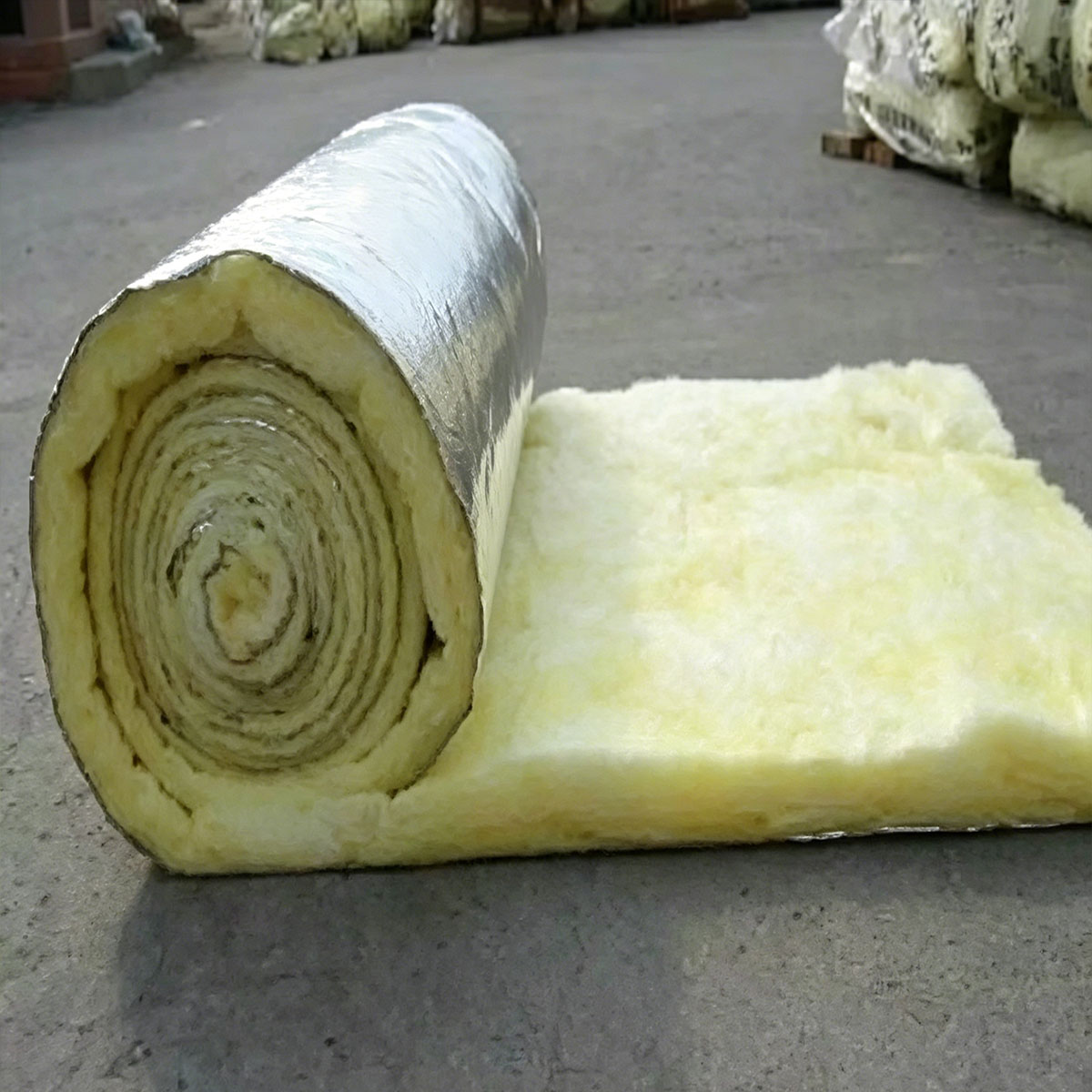
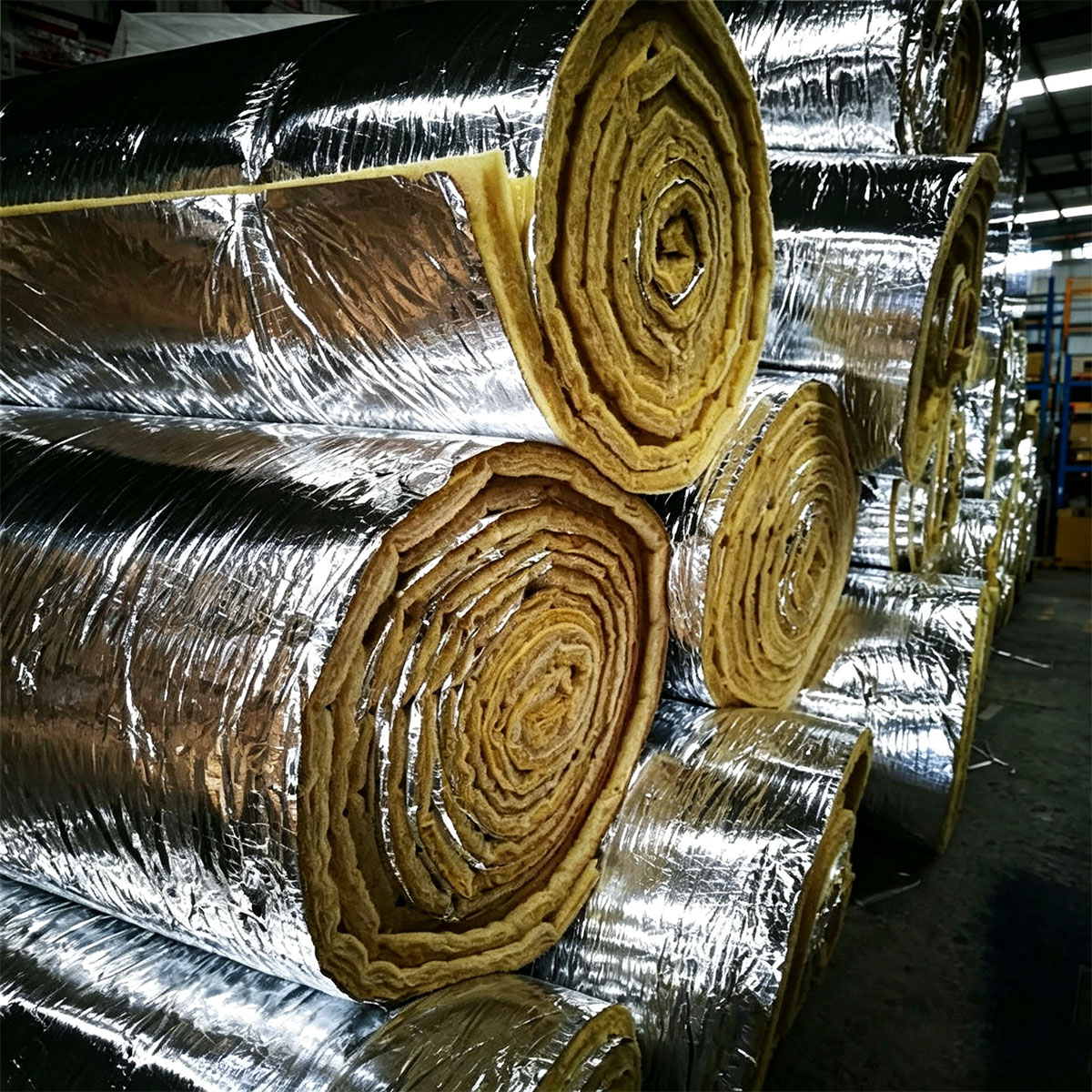
Foil faced insulation for metal buildings integrates the vapor control function directly into the insulation product, eliminating the need for a separate VCL sheet. The aluminum foil facing provides two simultaneous functions that are both relevant to moisture resistance:
Vapor Retardation
Aluminum foil has a water vapor permeance typically below 0.02 perms when tested to ASTM E96 (the standard test method for water vapor transmission). One perm is defined as one grain of water vapor per square foot per hour per inch of mercury vapor pressure difference; 0.02 perms is functionally a vapor barrier, not merely a vapor retarder. When the foil faces the warm (interior) side of the assembly, it blocks vapor diffusion from the interior air into the insulation and toward the cold steel panel.
Radiant Barrier Effect
Aluminum foil also has low emissivity in the infrared wavelengths (typically 0.04–0.08), meaning it reflects 92–90% of incident long-wave radiant heat rather than absorbing and re-radiating it. This radiant barrier effect reduces the amount of heat radiated from the hot steel roof surface into the building interior in summer, improving cooling performance. It also has a secondary moisture benefit: by reducing the heat loss through the roof panel, it raises the panel inner surface temperature, reducing the temperature difference between the interior air and the panel surface and thereby reducing the condensation risk.
Together, these two functions make foil faced insulation the most effective single-product solution for moisture resistant insulation in metal buildings with normal to moderately elevated interior humidity.
Reading Vapor Permeance Specifications Correctly
Vapor permeance is the key performance metric for moisture resistant insulation, and it is commonly misunderstood. The relevant test standard is ASTM E96 (or EN ISO 12572 for European specifications), and the result is expressed in perms (US) or ng/(Pa·s·m²) (SI). The key points for reading a vapor permeance specification are:
Vapor permeance vs. vapor resistivity: vapor permeance measures how fast vapor passes through a specific product at its specified thickness; vapor resistivity is a material property that can be used to calculate permeance for any thickness. The relevant value for specification is the permeance of the specific product configuration being used.
Conditioning temperature: ASTM E96 includes two test conditions — the dry cup method (desiccant) and the wet cup method (water). The wet cup value is more relevant for metal building applications where vapor moves from warm, humid interior air toward the cold exterior, because it better represents the direction of vapor flow in service.
Facing vs. unfaced: unfaced glass wool has a vapor permeance in the range of 30–50 perms — effectively vapor-open. Foil facing reduces this to below 0.02 perms — a reduction of more than 1,000 times. The facing specification is the dominant factor in the vapor performance of the complete product.
When Standard Foil Faced Insulation Is Sufficient — and When It Is Not
Standard foil faced insulation provides adequate moisture resistant performance for the majority of metal building applications, but there are conditions under which additional measures are warranted:
Normal interior humidity: standard foil faced insulation with the foil facing the interior provides adequate vapor control. The foil facing must be continuous — all laps and penetrations must be sealed with foil tape or equivalent approved sealant.
Elevated interior humidity: applications with process humidity, swimming pools, agricultural storage, or similar conditions create a larger vapor pressure differential and may require thicker insulation, double-sided foil, or a separate VCL in addition to the foil facing. A condensation risk assessment from the insulation manufacturer is recommended for these applications.
Cold storage and cryogenic applications: these applications require specialized specifications that are outside the scope of standard foil faced insulation products. The vapor control requirement in cryogenic applications is extreme, and the insulation specification must be developed in consultation with a specialist engineer.
High altitude or extreme climate conditions: in climates with very low exterior temperatures or very high interior humidity, the vapor pressure differential approaches the limits of what standard foil facing can control. Verify the specification with the manufacturer.
Installation Requirements for Moisture Resistant Foil Faced Insulation
The vapor control function of foil faced insulation is only effective when the foil facing is continuous across the entire building envelope. The most common installation errors that compromise moisture resistance are:
Unsealed laps: all longitudinal and transverse laps in the foil facing must be sealed with foil tape or an equivalent approved sealant before the interior lining is installed. Unsealed laps create vapor bypass paths that defeat the vapor control function.
Penetration sealing: all service penetrations (pipes, conduits, light fixtures, vents) must be sealed at the foil facing with a collar or tape detail that maintains vapor seal continuity. These details are frequently executed poorly on site and are a common source of condensation problems.
Facing orientation: the foil must face the warm (interior) side of the assembly. Installing the foil facing outward — a mistake that occasionally occurs on site — provides no vapor control for the interior and may actually trap moisture in the insulation.
Compression at fixings: impaling pin fixings compress the insulation at the attachment point, reducing the local insulation thickness and raising the local U-value. If the compression is severe enough, the local panel temperature at the fixing can drop below the dew point, creating localized condensation at each fixing point.
Thermal Performance and Moisture Resistance: The Interaction
Moisture accumulation in insulation degrades its thermal performance. Wet insulation has a higher thermal conductivity than dry insulation — liquid water conducts heat approximately 20 times faster than air. In severe cases, a wet moisture resistant insulation product can lose 50% or more of its declared thermal performance, resulting in energy consumption far above what the specification predicted and condensation inside the building that was not supposed to occur.
This interaction between moisture and thermal performance is why vapor control is not optional in metal building insulation — it is the mechanism that preserves the thermal performance of the insulation over the building's operating life. A correctly specified foil faced insulation system maintains its thermal performance because the foil facing prevents moisture from entering the insulation in the first place.
FAQ
Q1: How does foil faced insulation prevent condensation in metal buildings?
A: The aluminum foil facing provides a vapor barrier with permeance below 0.02 perms (ASTM E96), blocking water vapor from the warm interior from reaching the cold steel panel. Additionally, the foil's low emissivity reduces heat loss through the panel, raising the panel inner surface temperature and reducing the temperature difference that drives condensation risk. Both effects work simultaneously when the foil faces the interior.
Q2: What vapor permeance is required for moisture resistant insulation in metal buildings?
A: For standard metal building applications with normal interior humidity, a vapor permeance below 0.02 perms (the level provided by standard aluminum foil facing per ASTM E96) is typically adequate. For applications with elevated interior humidity, colder exterior temperatures, or other conditions that increase the vapor pressure differential, a condensation risk assessment from the manufacturer is recommended.
Q3: Does foil faced insulation require additional vapor control measures?
A: For standard metal building applications with normal interior humidity, the foil facing provides adequate vapor control without additional measures, provided it is correctly installed (foil facing the interior, all laps and penetrations sealed). For applications with elevated interior humidity, a separate VCL or upgraded facing specification may be required.
Q4: What happens if the foil facing is installed incorrectly — facing outward instead of inward?
A: Installing the foil facing outward reverses both the vapor control and radiant barrier functions. Vapor from the interior reaches the steel panel without passing through the vapor barrier, and condensation occurs inside the insulation rather than being prevented. This is a fundamental installation error that typically results in moisture damage within the first heating season.
Q5: How does moisture accumulation affect the thermal performance of insulation?
A: Wet insulation has a significantly higher thermal conductivity than dry insulation — liquid water conducts heat approximately 20 times faster than air. Severe moisture accumulation can reduce thermal performance by 50% or more, resulting in energy consumption far above specification predictions. Vapor control is therefore not optional — it is the mechanism that preserves the thermal performance of the insulation over the building's operating life.
Conclusion
Moisture resistant insulation for metal buildings is specified correctly when the product integrates vapor control with thermal performance in a single system that remains effective over the building's operating life. Foil faced insulation achieves this integration: the aluminum foil facing provides vapor permeance below 0.02 perms per ASTM E96, blocking vapor from reaching the cold steel panel; simultaneously, the foil's low emissivity (0.04–0.08) reflects radiant heat, reducing summer cooling demand and raising the panel inner surface temperature to further reduce condensation risk. For metal buildings with normal interior humidity, this combination of functions — delivered by a single product installed in one pass — provides the most reliable and cost-effective moisture resistant insulation specification available. For applications with elevated interior humidity or extreme climate conditions, a project-specific condensation risk assessment from the insulation manufacturer is recommended before finalizing the specification. Technical documentation, vapor permeance test data, and condensation risk assessment support for moisture resistant insulation in metal buildings is available from insulation manufacturers such as <>huashuoinsulation.com.
References
1. ASTM E96/E96M-16, "Standard Test Methods for Water Vapor Transmission of Materials," ASTM International, West Conshohocken, PA.
2. EN 13162:2012+A1:2015, "Thermal Insulation Products for Buildings — Factory Made Mineral Wool (MW) Products — Specification," European Committee for Standardization, Brussels.
3. ISO 6946:2017, "Building Components and Building Elements — Thermal Resistance and Thermal Transmittance — Calculation Methods," International Organization for Standardization, Geneva.
4. CIBSE Guide F: Energy Efficiency in Buildings, Chartered Institution of Building Services Engineers, London, 2019.
5. Jelle, B.P. (2011). "Traditional, state-of-the-art and future thermal building insulation materials." Energy and Buildings, 43(10), 2549-2563.