



Indoor air quality has emerged as a primary concern for building designers, contractors, and facility managers tasked with creating healthy occupied environments. Formaldehyde, classified as a Group 1 carcinogen by the International Agency for Research on Cancer, appears in trace concentrations from common building materials including conventional insulation products. This article examines formaldehyde-free rock wool insulation and its role in protecting indoor air quality while maintaining the fire resistance and thermal performance that make mineral wool a preferred construction material.
Understanding Formaldehyde in Traditional Insulation
Standard rock wool insulation utilizes phenol-formaldehyde resin binders to maintain fiber cohesion and board integrity during manufacturing, handling, and installation. While the cured binder is generally stable under ambient conditions, it can release small quantities of formaldehyde gas through three primary mechanisms: off-gassing during initial installation, thermal decomposition at elevated temperatures, and gradual emission over the product service life.
Measured formaldehyde emission rates from conventional rock wool typically range from 0.010 to 0.050 mg/m³ during the first 28 days after installation, declining to lower steady-state levels over subsequent months. While these concentrations fall below most regulatory thresholds, cumulative exposure from multiple emission sources within a building can contribute to elevated indoor formaldehyde levels.
What Is Formaldehyde-Free Rock Wool?
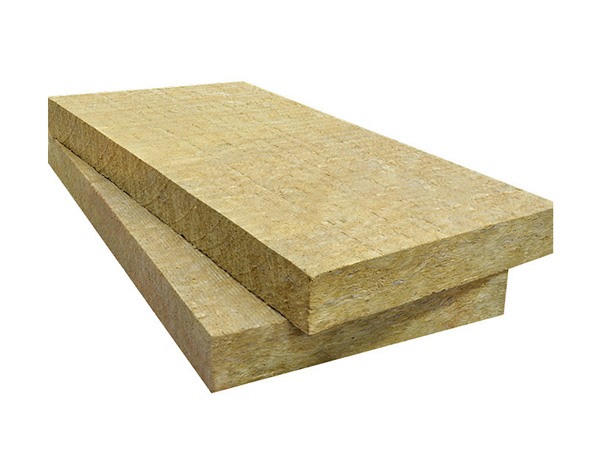
Formaldehyde-free rock wool insulation replaces traditional phenol-formaldehyde resin binders with alternative binding systems. These include acrylic-based adhesives, bio-derived organic binders derived from plant sources, and entirely inorganic binding technologies. The resulting product maintains equivalent fiber cohesion, board rigidity, and mechanical handling characteristics while eliminating formaldehyde as an emission source.
Independent laboratory testing per ISO 16000 and California Department of Public Health (CDPH) Standard Method v1.2 confirms formaldehyde emission concentrations below detection limits (<0.001 mg/m³) for quality formaldehyde-free products. This performance level satisfies the most stringent indoor air quality requirements globally, including Germany's AgBB scheme and Singapore's Green Mark certification system.
Health and Safety Benefits for Occupants
The elimination of formaldehyde emissions provides tangible health benefits for building occupants, particularly sensitive populations including children, elderly individuals, and persons with respiratory conditions. Chronic low-level formaldehyde exposure is associated with respiratory irritation, allergic dermatitis, eye watering, and in prolonged high-concentration scenarios, nasopharyngeal cancer risk.
Facilities targeting enhanced indoor air quality standards—including hospitals, schools, childcare centers, and elderly care facilities—increasingly specify formaldehyde-free insulation to minimize airborne contaminant loads and support healthier indoor environments. The International WELL Building Institute's formaldehyde concentration limit of 27 ppb (parts per billion) is readily achievable using formaldehyde-free mineral wool products.
Fire Resistance Performance Maintained
A critical consideration in evaluating formaldehyde-free insulation alternatives is maintaining the fire safety performance that makes rock wool indispensable in many applications. Formaldehyde-free rock wool retains its A1 non-combustible classification under EN 13501-1, confirming no contribution to fire growth and negligible smoke production during fire exposure.
Elevated temperature testing confirms that formaldehyde-free binder systems demonstrate equivalent or superior thermal stability compared to conventional phenol-formaldehyde binders. In industrial applications where insulation operates at 200-400°C, formaldehyde-free products avoid the binder decomposition and associated emissions that can occur with conventional products under sustained high-temperature exposure.
Green Building Certification Contributions
Formaldehyde-free rock wool insulation directly supports multiple credits in major green building certification frameworks. LEED v4.1 awards points for low-VOC materials under the Indoor Environmental Quality credit category, and formaldehyde-free insulation qualifies as a compliant product solution for this requirement.
BREEAM similarly credits materials with low VOC emissions and reduced environmental impact. For projects pursuing Passive House certification or net-zero carbon targets, the formaldehyde-free specification eliminates a potential indoor air quality liability while supporting the overall sustainability narrative of the built asset.
Acoustic Performance Equivalence
The acoustic absorption characteristics of rock wool derive from its fibrous fiber matrix rather than binder chemistry. Formaldehyde-free products deliver noise reduction coefficients (NRC) matching or exceeding conventional rock wool, typically ranging from 0.85 to 1.05 depending on density and thickness. This makes them fully suitable for acoustic control applications in offices, schools, healthcare facilities, and multi-family residential buildings.
Cost Considerations and Market Availability
Formaldehyde-free rock wool insulation typically commands a 10-25% price premium over conventional equivalent products, reflecting more expensive alternative binder chemistries and smaller production volumes. However, when evaluated against total project costs including indoor air quality testing, potential remediation, and green building certification fees, the incremental material cost frequently represents a minor portion of the overall project budget.
Market availability for formaldehyde-free products is expanding rapidly as major manufacturers respond to demand from health-conscious building projects and tightening VOC regulations in multiple jurisdictions. Most major mineral wool producers now offer formaldehyde-free or ultra-low emission product lines in standard density and thickness configurations.
Conclusion
Formaldehyde-free rock wool insulation represents a material advancement that eliminates formaldehyde emissions without sacrificing the thermal performance, fire resistance, acoustic properties, or mechanical durability that make rock wool a preferred insulation choice across industrial and commercial applications. For projects prioritizing occupant health, green building certification, or compliance with stringent indoor air quality regulations, formaldehyde-free rock wool provides a proven, available, and cost-effective specification option.
References
1. International Agency for Research on Cancer (IARC). "Formaldehyde." IARC Monographs, Volume 100F, World Health Organization, Lyon, France, 2012.
2. California Department of Public Health. "Standard Method for the Testing and Evaluation of Volatile Organic Chemical Emissions from Indoor Sources," CDPH/EHLB/R-174, Version 1.2, Sacramento, CA, 2017.
3. EN 13501-1:2007+A1:2009, "Fire Classification of Construction Products and Building Elements," European Committee for Standardization, Brussels, 2009.
4. U.S. Green Building Council. "LEED v4.1 Building Design and Construction: Thermal Insulation in Schools and Commercial Buildings," USGBC, Washington, DC, 2023.
5. Australasian Sustainable Built Environment Council. "Housing Accessibility and Affordability: The Role of Thermal Insulation," Sydney, 2020.