



Selecting the correct pipe insulation material is a critical engineering decision that affects energy efficiency, system reliability, maintenance cost, and personnel safety throughout the facility's operating life. Glass wool pipe insulation and closed-cell foam insulation are the two most widely specified materials for mechanical piping systems, each with distinct performance characteristics that make them suitable for different applications. This comparison guide examines the technical differences between these materials to support informed specification decisions.
Thermal Performance Comparison
The primary function of pipe insulation is to reduce conductive heat transfer between the pipe content and the ambient environment. Glass wool pipe insulation achieves thermal conductivity values of 0.032-0.040 W/mK at 10°C mean temperature, depending on density and product type. Closed-cell foam insulation (polyethylene, elastomeric rubber, polyurethane) typically achieves 0.030-0.038 W/mK at the same temperature—a comparable but slightly better thermal performance profile.
However, thermal performance in service depends on more than just the declared conductivity value. For cold piping applications, foam insulation's closed-cell structure provides superior moisture resistance, maintaining thermal performance in high-humidity environments where glass wool pipe insulation may absorb moisture and experience thermal conductivity increase. For hot piping below 100°C, both materials perform similarly when properly specified and installed with appropriate vapor retarders.
For applications above 100°C, glass wool pipe insulation maintains stable thermal conductivity, while some foam materials experience thermal conductivity increase due to expansion of trapped gases within the closed-cell structure at elevated temperatures. Verify the temperature-dependent thermal conductivity curves for both materials when specifying insulation for hot water, steam, or process heating piping.
Moisture and Condensation Resistance
Moisture is the primary cause of pipe insulation failure. When insulation becomes wet, thermal performance degrades rapidly and the insulation may promote external pipe corrosion. Closed-cell foam insulation provides superior moisture resistance because its cellular structure contains individual gas-tight cells that prevent liquid water and water vapor transmission. Glass wool pipe insulation is inherently hydrophobic at the fiber level, but the open fibrous structure allows water vapor diffusion and, if the vapor retarder is damaged, liquid water ingress.
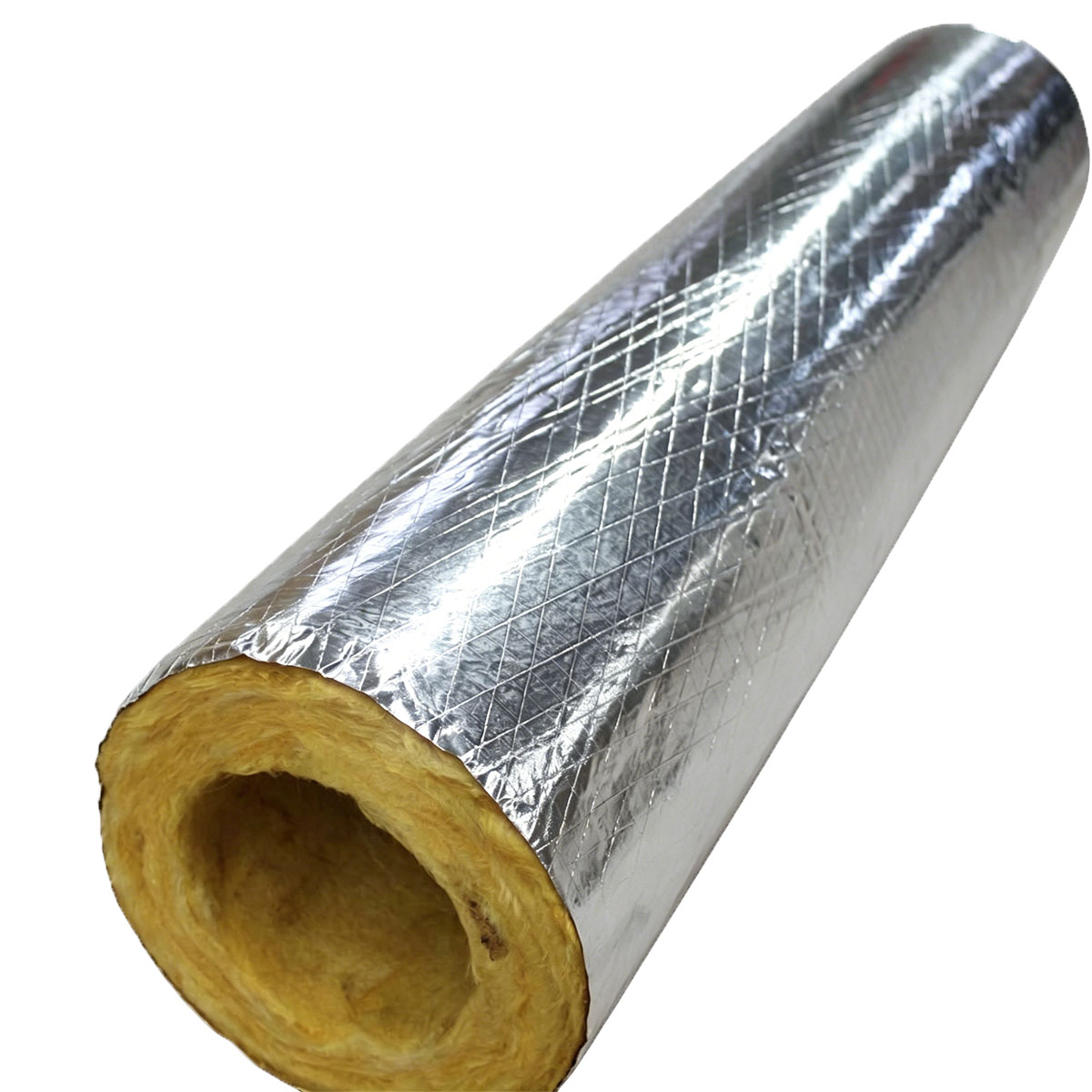
For chilled water and refrigeration piping operating below ambient dew point, closed-cell foam is generally the preferred specification because it does not require a separate vapor retarder—the material itself provides the moisture barrier. Glass wool pipe insulation for cold piping must be specified with a continuous, properly sealed vapor retarder system, adding installation complexity and potential failure points at joints and penetrations.
For hot piping and double-wall piping where condensation is not a concern, glass wool pipe insulation performs reliably with standard jacketing systems and is not disadvantaged relative to foam materials regarding moisture performance.
Fire Safety and Non-Combustibility
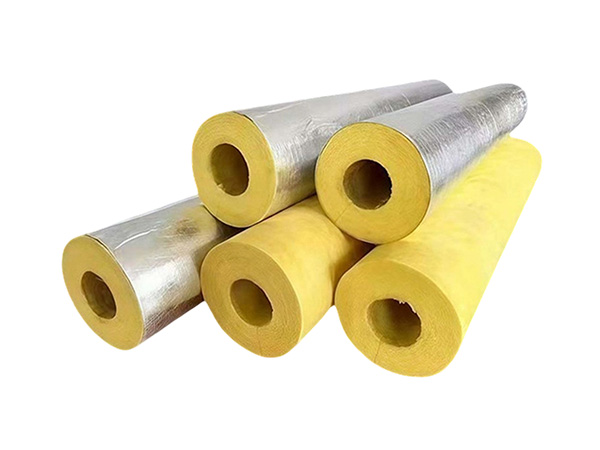
Fire safety is a significant differentiator between glass wool pipe insulation and foam alternatives. Glass wool pipe insulation has a non-combustible mineral fiber core (A1 fire classification per EN 13501-1) that does not contribute to fire load, flame spread, or smoke development. The material does not melt, drip, or produce flaming droplets when exposed to fire.
Closed-cell foam insulation materials vary in fire performance depending on composition and formulation. Standard polyethylene foam is combustible and melts at relatively low temperatures. Elastomeric rubber foam can achieve limited-combustibility ratings with flame-retardant additives but will still burn and produce smoke under sustained fire exposure. Polyurethane foam is highly flammable unless formulated with high levels of flame retardants—even then, it will contribute to fire load and may produce toxic combustion products.
For applications in fire-rated corridors, escape routes, or facilities with stringent fire safety requirements (oil and gas, chemical processing, public assembly), glass wool pipe insulation is the preferred specification from a fire safety perspective.
Maximum Service Temperature
Service temperature limits are a critical selection criterion. Glass wool pipe insulation is available in standard grades for continuous service up to 230°C and high-temperature grades up to 450°C. Closed-cell foam insulation has lower temperature limits: polyethylene foam typically to 80°C, elastomeric rubber foam to 105°C, and polyurethane foam to 120°C (polyisocyanurate variants to 150°C).
For high-temperature process piping, steam systems, and boiler connections, glass wool pipe insulation is the only viable option among these materials. Foam insulation in high-temperature service will soften, shrink, melt, or combust depending on the material and temperature exposure.
Installation and Handling
Glass wool pipe insulation pre-formed sections are lightweight and easy to handle but require PPE during cutting and fitting to prevent fiber irritation. The sections are fitted around pipes and secured with pins, bands, or wire, then sealed at joints and finished with jacketing. Installation labor for glass wool pipe insulation is moderate.
Closed-cell foam insulation is generally faster to install because the material is flexible, requires no pins or wires for retention (adhesive and tape secure the insulation), and does not require separate jacketing in many applications. For large-diameter piping and complex geometries, foam insulation can be fabricated on-site more easily than glass wool pipe insulation, reducing installation time and cost.
Cost Comparison
Material cost for glass wool pipe insulation is generally lower than closed-cell foam insulation on a per-meter basis for standard pipe sizes. However, total installed cost must account for jacketing, vapor retarder (if required), and installation labor. In applications where foam insulation does not require jacketing, its installed cost may be competitive with or lower than glass wool pipe insulation despite higher material cost.
For large projects, conduct an installed-cost comparison rather than specifying based on material cost alone. The cost differential between materials is often smaller than the cost impact of selecting the wrong material for the application conditions.
FAQ
Q1: Which pipe insulation is better for chilled water systems?
A: Closed-cell foam is generally preferred for chilled water because it provides built-in moisture resistance without requiring a separate vapor retarder. Glass wool pipe insulation can be used if a continuous, properly sealed vapor retarder system is specified and installed correctly.
Q2: Can glass wool pipe insulation be used for hot water and steam?
A: Yes. Glass wool pipe insulation is suitable for hot water up to 230°C (standard grade) and steam systems with appropriate high-temperature variants. Foam insulation cannot be used for steam or high-temperature hot water.
Q3: Which material provides better fire safety?
A: Glass wool pipe insulation is non-combustible and does not contribute to fire load. Foam insulation materials are combustible to varying degrees and may produce smoke and toxic gases when exposed to fire. For fire-critical applications, specify glass wool.
Q4: How do I determine the correct insulation thickness?
A: Insulation thickness depends on pipe size, operating temperature, ambient conditions, and project energy code requirements. Use ASHRAE 90.1 minimum thickness tables as a starting point, then verify against condensation control requirements for cold piping and economic thickness analysis for hot piping.
Q5: Can both materials be used together in the same facility?
A: Yes. It is common to specify foam insulation for chilled water and refrigeration piping and glass wool pipe insulation for hot water, steam, and high-temperature process piping within the same facility, matching material properties to service conditions.
Conclusion
The choice between glass wool pipe insulation and foam insulation should be based on a systematic evaluation of service temperature, moisture exposure, fire safety requirements, and total installed cost. For cold piping and refrigeration applications where moisture resistance is paramount, closed-cell foam is generally the preferred specification. For hot water, steam, and fire-sensitive applications, glass wool pipe insulation is the superior choice. Many facilities appropriately use both materials, selecting each for the applications where its performance advantages deliver the best value and reliability.
References
1. ASTM C612-14, "Standard Specification for Mineral Fiber Block and Board Thermal Insulation," ASTM International, West Conshohocken, PA, 2014.
2. ASTM C534-17, "Standard Specification for Preformed Flexible Elastomeric Foam (FEF) Insulation in Sheet and Tubular Form," ASTM International, West Conshohocken, PA, 2017.
3. ASHRAE Standard 90.1-2022, "Energy Standard for Buildings Except Low-Rise Residential Buildings," American Society of Heating, Refrigerating and Air-Conditioning Engineers, Atlanta, GA, 2022.
4. EN 15502-1:2012, "Gas Appliances — Central Heating Boilers — General Requirements," European Committee for Standardization, Brussels, 2012.
5. ISO 23993:2008, "Thermal Insulation Products for Building Equipment and Industrial Installations — Determination of Design Heat Transfer Coefficients," International Organization for Standardization, Geneva, 2008.