



Proper installation is the single most significant factor determining whether glass wool insulation delivers its rated thermal and acoustic performance throughout its design service life. Even the highest-quality insulation products will underperform significantly if installed with gaps, compression, moisture ingress, or inadequate protection. This article provides step-by-step guidance on glass wool installation best practices for industrial and commercial applications, covering pre-installation preparation, handling procedures, fixing methods, and quality verification protocols.
Pre-Installation Preparation
Before any insulation is installed, verify that the substrate and supporting structure meet specified conditions. Surface temperature must be above the dew point to prevent condensation forming on or behind insulation—installing insulation on cold surfaces in humid conditions risks moisture condensation within the insulation layer that degrades thermal performance and may cause corrosion under metal jacketing.
Clean all surfaces to remove debris, weld slag, scale, oil, grease, and moisture. For equipment and pipework insulation, verify that all pressure testing, weld inspection, and corrosion protection coating applications are complete and cured. Once insulation is installed over a joint or weld, that area becomes inaccessible for inspection or repair without removing the insulation—complete all quality checks before covering.
Verify that storage conditions for insulation materials are appropriate: products must be kept dry, elevated from ground level, and protected from precipitation. Wet or damp insulation must be dried before installation or replaced entirely—wet glass wool loses thermal performance and may promote corrosion on insulated substrates.
Handling and Personal Protective Equipment
Glass wool fibers can cause skin, eye, and respiratory irritation during handling. While modern formaldehyde-free products reduce these effects compared to historical formulations, appropriate PPE remains mandatory for installation personnel.
Minimum PPE requirements for glass wool installation:
Long-sleeved work clothing and gloves covering all exposed skin
Safety glasses or goggles protecting against fiber irritation
NIOSH N95 or FFP2-rated disposable respirator for cutting and fitting operations
Covered waste disposal procedures to prevent fiber release at work areas
Provide pre-task briefing on proper handling techniques and make skin care products (barrier creams, washing facilities) available. Workers with known fiber sensitivity should be assigned to other tasks during glass wool installation.
Cutting and Fitting Procedures
Cut glass wool using sharp serrated knives or purpose-designed insulation cutting tools. Dull blades compress fibers at the cut edge, reducing thermal performance and creating a rough, friable edge that sheds fibers. For thick boards and high-density products, use saw-tooth blades or hot wire cutters appropriate for the product density.
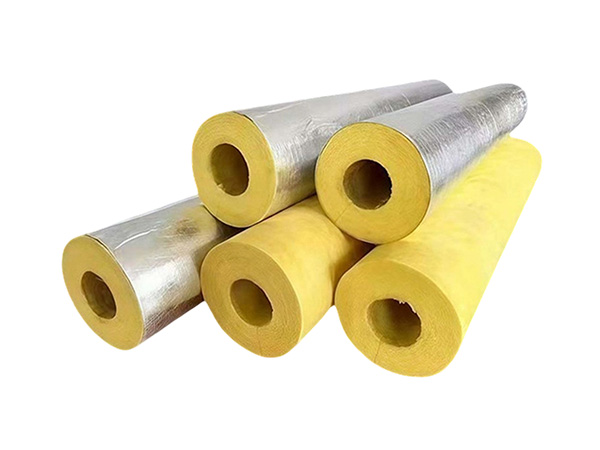
For pipe insulation, measure circumference carefully and allow for the insulation to be fitted snugly without gaps. Pre-formed pipe sections should be dry-fitted before adhesive application to verify alignment and joint tight fit. Miter corners on board insulation carefully to eliminate gaps at intersections and changes in direction.
Maximum permissible gaps between insulation units and at joints is 3 mm—larger gaps allow significant convective heat transfer that bypasses the insulation. Fill gaps smaller than 3 mm with manufacturer's recommended sealant, adhesive, or strip insulation; do not leave gaps unfilled assuming the insulation is "close enough."
Fixing and Securing Methods
Mechanical fixing is the preferred method for securing glass wool boards to metal substrates in industrial applications. Pin studs welded to vessel and tank surfaces, or drilled and welded for pipework, provide permanent attachment points that maintain insulation position under thermal cycling, vibration, and wind loading.
Pin spacing is determined by insulation thickness and density: for 50 mm thickness at 48 kg/m³, maximum pin spacing of 300 mm centers in both directions provides adequate support. Increase pin density for thicker or lower-density products. Calculate actual pin spacing based on the manufacturer's load rating and installation conditions rather than applying generic spacing rules.
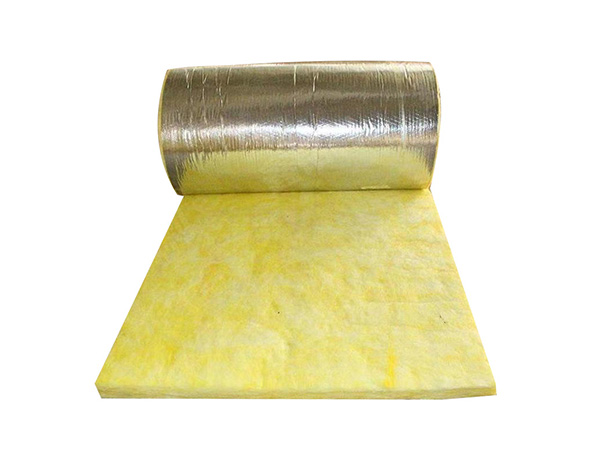
For building applications, staple or nail facings to studs and joists at manufacturer-recommended spacing. For cavity insulation, friction-fit batts should be cut 2-3% oversized to ensure snug fit without excessive compression that would reduce effective thickness. Avoid compressing glass wool—compression reduces the trapped air content that provides insulation value.
Vapor Retarders and Jacketing
In cold-service applications where the insulated surface temperature falls below the surrounding dew point, install a continuous vapor retarder on the warm side of the insulation system. Vapor retarder should be continuous at all penetrations, joints, and terminations—tape all overlaps and seal edges with compatible sealant.
For hot-service applications, the vapor retarder goes on the cold (outer) side to prevent moisture ingress from ambient air into the cold insulation surface. Reversing this arrangement—installing vapor retarder on the wrong side—traps moisture within the insulation and causes progressive performance degradation.
Aluminum or stainless steel jacketing over outdoor insulation protects against weather, UV exposure, mechanical damage, and wind wash. Apply jacketing with overlaps oriented downward to shed precipitation, seal all joints with approved sealant or mastic, and install circumferential bands at manufacturer-recommended spacing to prevent slippage.
Quality Verification and Inspection
Establish inspection and test plan checkpoints before installation commences. Pre-installation inspection verifies substrate conditions and material specification compliance. During installation, verify correct fixing density, gap management, and vapor retarder continuity. Post-installation inspection confirms overall system integrity before handover.
Thermal imaging surveys on completed installations provide objective verification of system integrity, identifying gaps, compression zones, and missing sections that would not be visible during visual inspection. Conduct thermal imaging after the system has reached thermal equilibrium—typically 24 hours of stable operating conditions for hot systems.
Conclusion
Glass wool installation quality directly determines whether the insulation system achieves its design thermal and acoustic performance over its intended service life. Following established handling, cutting, fixing, and protection procedures protects the material's performance characteristics and ensures that the installed system delivers the expected value. Investment in proper installation practices reduces call-backs, extends maintenance intervals, and protects the building owner's thermal performance specification.
References
1. ASTM C1015-21, "Standard Practice for Installation of Cellulosic and Mineral Fiber Loose-Fill Thermal Insulation," ASTM International, West Conshohocken, PA, 2021.
2. NAIMA 1004-2018, "Fiber Glass Duct Liner Standard," North American Insulation Manufacturers Association, Arlington, VA, 2018.
3. ASHRAE Handbook — HVAC Systems and Equipment, Chapter 22: Thermal Insulation, American Society of Heating, Refrigerating and Air-Conditioning Engineers, Atlanta, GA, 2020.
4. CIBSE Guide F: Energy Efficiency in Buildings, Chartered Institution of Building Services Engineers, London, 2019.
5. ISO 12241:2008, "Thermal Insulation for Building Equipment and Industrial Installations — Calculation Rules," International Organization for Standardization, Geneva, 2008.