



Ductwork insulation is one of the most cost-effective energy efficiency measures available in commercial HVAC systems. The air transported through duct insulation systems represents significant thermal energy that is lost through uninsulated or poorly insulated ductwork before reaching its intended destination. Glass wool is widely recognized as one of the best duct insulation materials for commercial buildings, but selecting the correct product variant requires understanding the different forms available and their specific application suitability.
Why Glass Wool Is Among the Best Duct Insulation Materials
Glass wool ranks among the best duct insulation materials for commercial HVAC applications due to its combination of low thermal conductivity (0.032-0.040 W/mK), excellent acoustic absorption, non-combustible A1 fire classification, broad availability, and competitive installed cost. Unlike closed-cell plastic foam duct insulation materials, glass wool does not melt, drip, or contribute to flame spread when exposed to fire. The acoustic absorption capability adds significant value in duct insulation applications where HVAC fan noise and air movement sounds must be controlled.
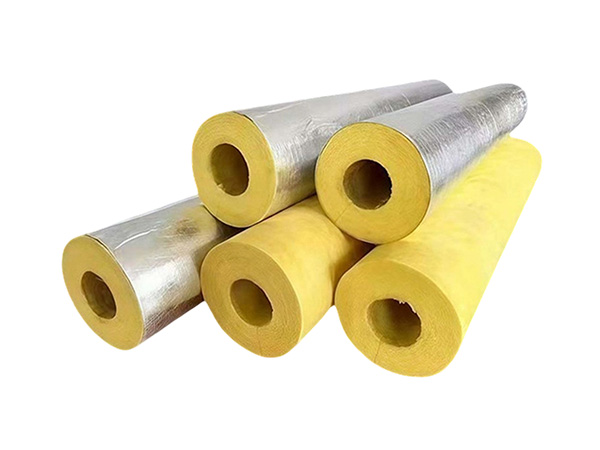
Duct Liner: Internal Glass Wool Duct Insulation
Duct liner is a glass wool board product designed for bonding to the interior surface of sheet metal ductwork, with the fibrous facing oriented toward the airstream. Available in standard thicknesses from 13 mm to 50 mm, duct liner is the highest-performance form of glass wool duct insulation because it eliminates thermal bridging through the sheet metal duct wall entirely. Acoustic performance of duct liner is exceptional—the fibrous facing absorbs fan noise, turbulence noise, and breakout noise, reducing radiated noise levels by 8-15 dB(A) depending on liner thickness, density, and airstream velocity.
Duct liner products should comply with ASTM C1071 or EN 14303. Standard facing types include fiberglass mat (standard duty) for airstream velocities up to 12.7 m/s, coated glass mat (high-velocity) for up to 25.4 m/s, and perforated aluminum for maximum acoustic absorption in low-velocity systems.
Duct Wrap: External Glass Wool Duct Insulation
Duct wrap (also called duct lagging) is a glass wool blanket product designed for wrapping around exterior duct surfaces. Available in thicknesses from 25 mm to 100 mm, duct wrap is more economical than duct liner for large rectangular duct runs where acoustic absorption is less critical than thermal resistance. Installation involves wrapping glass wool around the duct exterior with all joints staggered, securing with mechanical fasteners, and sealing joints with tape or mastic.
Performance Comparison Summary
Thermal efficiency: Duct liner outperforms duct wrap for equivalent insulation thickness because it eliminates sheet metal thermal bridging. A 50 mm duct liner system provides 20-30% greater effective thermal resistance than 50 mm duct wrap on the same duct configuration.
Acoustic performance: Duct liner provides superior acoustic absorption compared to duct wrap. For applications where HVAC noise control is a primary requirement, duct liner should be specified regardless of higher material cost.
Installed cost: Duct wrap has lower material cost than duct liner and requires less specialized labor, making it the preferred choice where acoustic requirements are secondary to thermal efficiency and budget is constrained.
Specification and Quality Standards
Specify glass wool duct insulation products carrying third-party certification to ASTM C1071, NAIMA 1004, or EN 14303. These standards establish minimum requirements for thermal conductivity, surface burning characteristics, fungi resistance, and erosion resistance. Projects targeting LEED or equivalent green building certification should select duct insulation products with Environmental Product Declarations (EPDs) documenting embodied carbon and recycled content.
Conclusion
Glass wool is established among the best duct insulation materials for commercial HVAC applications. Duct liner provides the highest thermal and acoustic performance for sheet metal ductwork; duct wrap offers economical thermal resistance for large rectangular duct runs; and board products enable custom insulation solutions for site-fabricated ductwork. Selecting the appropriate form based on specific performance requirements optimizes the balance between system performance and installed cost.
References
1. ASTM C1071-19, "Standard Specification for Fibrous Glass Duct Lining Insulation (Thermal and Acoustical)," ASTM International, West Conshohocken, PA, 2019.
2. NAIMA 1004-2018, "Fiber Glass Duct Liner Standard," North American Insulation Manufacturers Association, Arlington, VA, 2018.
3. EN 14303:2009+A1:2013, "Thermal Insulating Products for Building Equipment and Industrial Installations — Factory Made Mineral Wool (MW) Products — Specification," European Committee for Standardization, Brussels, 2013.
4. ASHRAE Standard 90.1-2022, "Energy Standard for Buildings," American Society of Heating, Refrigerating and Air-Conditioning Engineers, Atlanta, GA, 2022.
5. ASHRAE Handbook — HVAC Systems and Equipment, Chapter 16: Duct Construction, American Society of Heating, Refrigerating and Air-Conditioning Engineers, Atlanta, GA, 2020.